Ecommerce in Australia continues its remarkable growth trajectory in 2025, with more small businesses and startups launching online stores than ever before. Whether you’re selling handmade crafts, digital products, or retail goods, choosing the right ecommerce platform is crucial for your success.
This comprehensive Shopify vs WordPress comparison will help you understand which platform suits your business needs. We’ll examine everything from costs and features to SEO capabilities and scalability. At Ryzr Studios, we’ve helped countless Australian businesses make this critical decision, and this guide distills our expertise into actionable insights for small business owners, content creators, and ecommerce entrepreneurs.
What Are Shopify & WordPress (WooCommerce)?
What Is Shopify?
Shopify is a hosted ecommerce platform that provides an all-in-one solution for building and managing your online store. Unlike self-hosted platforms, Shopify includes hosting, security features, payment gateways, and a built-in store builder within its subscription. This means you don’t need separate hosting services or worry about server maintenance. The platform handles technical aspects like SSL and HTTPS certificates, ensuring your store remains secure and compliant with industry standards.
What Is WordPress + WooCommerce?
WordPress operates as a content management system (CMS) that becomes an ecommerce platform when paired with the WooCommerce plugin. This combination transforms your WordPress site into a fully functional online store. However, unlike hosted vs self-hosted platform options like Shopify, WordPress requires you to arrange separate hosting, install the software, and configure various plugins for ecommerce functionality. This approach offers tremendous flexibility but demands more technical involvement.
Cost Comparison (Australia Focus)
Shopify Pricing
Shopify pricing vs WordPress costs presents an interesting comparison. Shopify’s monthly plans in Australia start around AUD 39 for Basic, AUD 105 for standard Shopify, and AUD 399 for Advanced. These prices include hosting, security, and core ecommerce tools. However, transaction fees apply unless you use Shopify Payments, and premium apps can add AUD 20-200+ monthly to your budget.
WordPress/WooCommerce Costs
The WooCommerce ecommerce platform itself is free, but running it isn’t. Expect to pay AUD 10-50 monthly for quality hosting, AUD 15-20 annually for your domain, and variable costs for premium themes and plugins. Security plugins, backup solutions, and advanced ecommerce features can add AUD 100-500+ annually depending on your requirements.
True Cost of Ownership
When comparing the best ecommerce platform Australia businesses can choose, consider total ownership costs. Shopify offers predictable monthly expenses, making budgeting straightforward for ecommerce for small business operations. WordPress WooCommerce benefits from lower entry costs but can become expensive as you add functionality. Your technical skill level significantly impacts WordPress expenses since DIY management saves money compared to hiring developers.
Ease of Setup & Management
Shopify ease of use stands out immediately. Most users launch functional stores within hours, thanks to intuitive interfaces and guided setup wizards. The hosted solution eliminates concerns about server configuration, updates, or technical maintenance.
WordPress customization flexibility comes with complexity. Setting up WordPress requires more steps: choosing hosting, installing WordPress, adding WooCommerce, configuring payment options, and optimizing security. While this online store setup process offers greater control, it typically requires technical expertise or professional help, especially for beginners.
Design & Customization
Shopify provides professionally designed themes that work beautifully across devices, ensuring mobile responsive design from the start. Customization happens through visual editors, making design adjustments accessible to non-technical users. However, deeper customization requires Liquid templating knowledge.
WordPress customization flexibility truly shines here. Thousands of themes and countless plugins enable virtually unlimited design possibilities. Your online store builder options are boundless, though navigating choices and ensuring compatibility requires careful consideration.
Ecommerce Features
Product Management & Checkout
Shopify features vs WordPress features reveals different philosophies. Shopify ecommerce tools provide robust product management, inventory tracking, and streamlined checkout processes out-of-box. The platform excels at core ecommerce functionality without additional configuration.
WooCommerce ecommerce platform capabilities expand through plugins, offering flexibility for unique business models. Product variations, subscription services, and booking systems are achievable but require finding and configuring appropriate plugins.
Payment Gateways & Local Australian Options
Both platforms support popular payment gateways including Stripe, PayPal, Afterpay, and Zip—crucial for Australian customers. Shopify Payments simplifies transactions and eliminates additional fees, while WooCommerce supports numerous gateways via plugins, providing extensive multi-channel selling options.
SEO & Content Strength
This area showcases significant differences in the Shopify vs WordPress SEO for ecommerce debate. WordPress SEO advantages are substantial. The platform’s foundation as a CMS makes it the best ecommerce SEO platform for content-rich strategies. Advanced SEO optimisation through plugins enables precise control over metadata, URL structure, schema markup, and sitemap XML files.
Shopify SEO features are solid but more limited. The platform handles canonical tags automatically and provides basic metadata controls. However, Shopify vs WooCommerce Australia businesses should note that WooCommerce SEO tools offer deeper technical control for on-page SEO Shopify can’t match. WordPress enables sophisticated ecommerce SEO strategies Australia businesses need for content marketing integration.
The best platform for online store SEO depends on your strategy. If ecommerce marketing tools and content integration drive your approach, WordPress delivers superior on-site SEO WordPress capabilities. For straightforward product selling without extensive content, Shopify SEO features suffice.
Performance, Scalability & Security
Performance
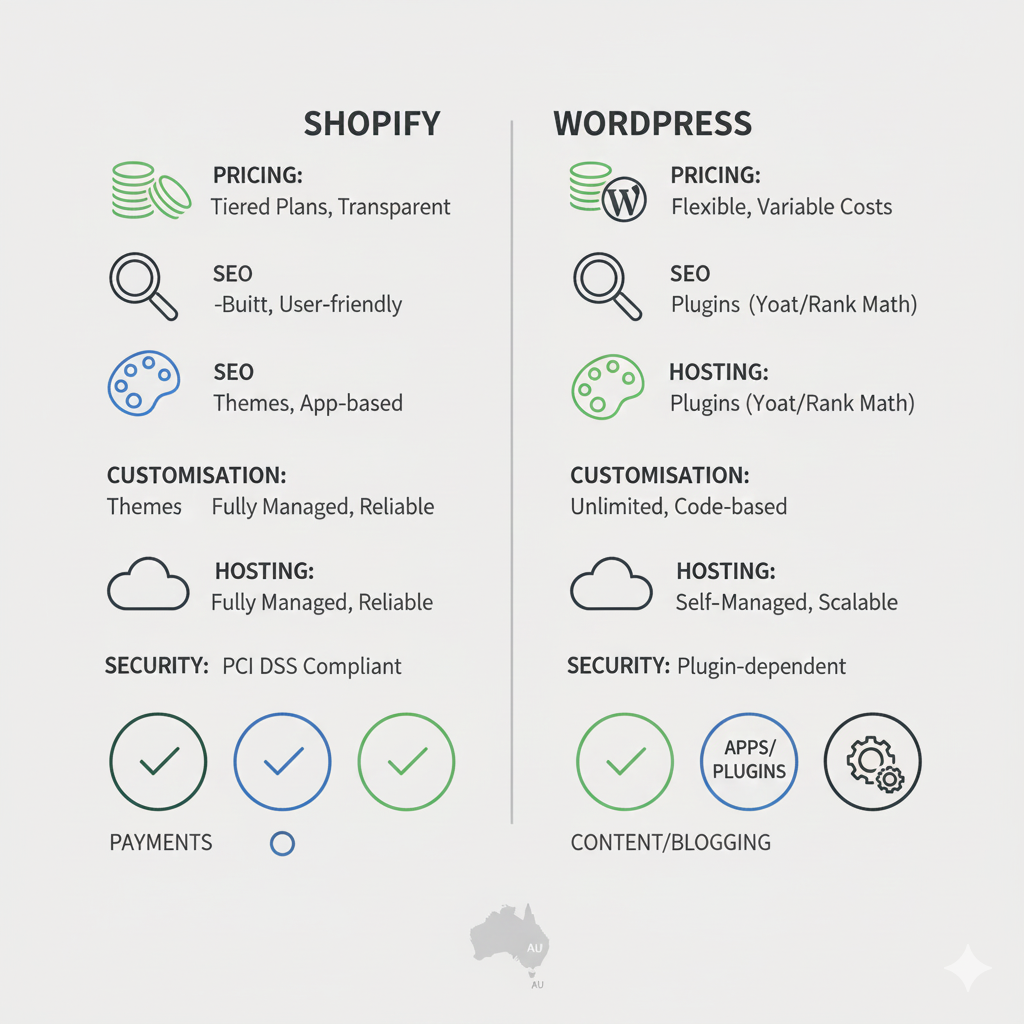
Site speed and performance significantly impact conversions. Shopify’s hosted infrastructure ensures consistent performance and handles traffic spikes efficiently. The platform manages mobile-first indexing requirements automatically.
WordPress performance varies dramatically based on hosting quality. Premium managed hosting delivers excellent site speed, while budget hosting may struggle. Ecommerce scalability on WordPress requires proactive hosting upgrades as traffic grows.
Security
Ecommerce security Shopify vs WordPress presents clear differences. Shopify manages security updates, PCI compliance, and threat protection automatically. SSL certificates and HTTPS encryption come standard.
WordPress requires vigilant security management through plugins, regular updates, and secure hosting choices. While excellent security is achievable, it demands ongoing attention and expertise.
Support & Community
Shopify provides 24/7 direct support via chat, email, and phone—valuable for urgent issues. Documentation is comprehensive and user-friendly.
WordPress/WooCommerce relies on community forums, extensive documentation, and a massive developer ecosystem. While support isn’t centralized, the community’s size means most questions have existing answers. Professional support requires hiring developers or purchasing premium plugin support.
Who Should Choose Which Platform?
Choose Shopify if:
- You need fast online store setup with minimal technical involvement
- Predictable costs and managed hosting appeal to you
- Your focus is selling products rather than publishing extensive content
- 24/7 professional support provides peace of mind
- You’re launching your first ecommerce venture
Choose WordPress/WooCommerce if:
- You want complete control over your ecommerce platform
- Content marketing and SEO are central to your strategy
- You have technical expertise or budget for development
- Long-term cost flexibility matters more than predictable expenses
- You need highly customized ecommerce features
Conclusion & Final Recommendation
The Shopify vs WordPress ecommerce question doesn’t have a universal answer. Both platforms excel in different scenarios for Australian businesses in 2025.
Shopify wins for entrepreneurs seeking simplicity, reliability, and speed. It’s ideal for product-focused stores where time-to-market and ease of management outweigh customization needs.
WordPress/WooCommerce suits businesses prioritizing content, SEO control, and unique functionality. Content-rich brands, businesses with technical resources, and those requiring extensive customization will find WordPress’s flexibility invaluable.
Consider your technical comfort level, long-term business goals, and whether content marketing or pure ecommerce drives your strategy. Both platforms can build successful online stores—the best ecommerce platform Australia businesses should choose depends entirely on their specific situation.
At Ryzr Studios, we work with Australian businesses to build solutions that actually perform — and our Shopify & WordPress Store Development services ensure your website is fast, scalable, and ready to grow
FAQs
Shopify vs WordPress: which is cheaper in Australia?
WooCommerce has lower initial costs, but total expenses vary based on hosting, plugins, and maintenance. Shopify offers predictable monthly pricing but can become expensive with premium apps. For basic stores, WooCommerce may cost less; for feature-rich stores requiring minimal management, Shopify’s all-inclusive approach often provides better value.
Can I switch platforms later?
Yes, though migration requires effort. Product data, customer information, and orders can transfer between platforms using migration tools or professional services. Content, customizations, and SEO elements need careful handling during transitions.
Do I need a developer for WordPress?
Not necessarily. Basic WordPress and WooCommerce setup is manageable for tech-comfortable users. However, custom features, advanced design modifications, and ongoing optimization often benefit from professional expertise.
Which has better SEO tools?
WordPress offers superior SEO control through plugins and inherent CMS strengths. Shopify provides good SEO capabilities for typical ecommerce needs but lacks the deep technical control WordPress enables for advanced ecommerce SEO strategies.